
Boost Reading Engagement with a Simple Literacy Tool for Young Readers
Updated: Apr 23

Keeping young readers motivated can be a challenge in any elementary classroom. Sometimes, students need a little spark to keep their reading efforts alive and growing.
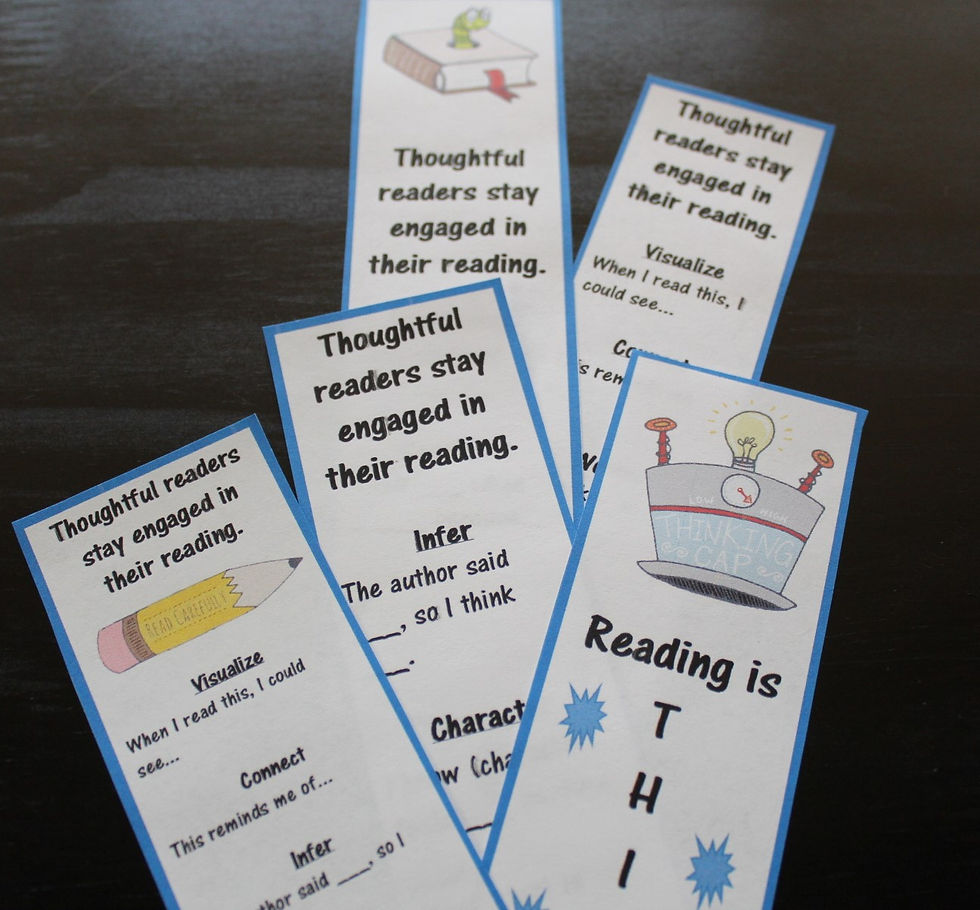
One simple, low-cost tool can make a big difference in encouraging active engagement and deepening reading comprehension: a bookmark designed to support reading instruction.
Why Use a Bookmark as an Engagement Tool?
Teachers often try various tools to boost reading motivation.
Items like post-it notes, special pens, and reader's notebooks are popular, but they can add up in cost when purchased for an entire class.
A bookmark, on the other hand, is inexpensive to print and easy to distribute.
More importantly, students love receiving bookmarks. They feel like a special gift, much like the excitement children show when visiting the school library and receiving a bookmark with their book checkout. This small token can make reading feel more personal and fun.
How Bookmarks Support Reading Instruction
A bookmark is a perfect place to include bite-sized chunks of information that reinforce key reading skills.
Let's call it--A Content Stuffed Bookmark!
Since space is limited, the content must be clear and focused. This makes it easier for young readers to process and apply the ideas while they read.
For example, a Content Stuffed Bookmark can include:
Reminders that reading is thinking—encouraging students to ask questions and make predictions
Simple strategies for improving reading comprehension, such as looking for the main idea or visualizing the story
Prompts to jot down thoughts in a reader's notebook or to mark pages with sticky notes for discussion
These small prompts keep students actively engaged with the text and help them connect reading to thinking, which is the heart of strong literacy skills.

Practical Tips: Using Content Stuffed Bookmarks in Your Classroom
✅ Create bookmarks that match your current reading instruction focus. For example, if you are teaching story elements, include questions about characters, setting, and plot.
✅ Encourage students to keep their bookmarks in their books as a quick reference during independent reading.
✅ Combine bookmarks with a reader's notebook where students can write down their thoughts or answers to bookmark prompts.
✅ Rotate bookmarks regularly to introduce new skills and keep the tool fresh and exciting.
By using bookmarks this way, you build a habit of active engagement. Students learn that reading is not just about decoding words but about thinking deeply and interacting with the text.
Start with a general Content Stuffed Bookmark to introduce your readers to the active engagement tool. Check out the gallery below:


These Reading Is Thinking Bookmarks can be found here:


Comments