
Transforming Worksheets Into Think Sheets That Develop Strong Readers

Every now and then, a quote appears that makes you pause and rethink something you’ve seen hundreds of times in classrooms. Recently, I came across one by Donalyn Miller that did just that:
“When we put a worksheet in front of kids, it's a signal for them to do the least thinking possible.”
That line stayed with me. It sparked new reflection and reminded me of many conversations I’ve had with educators over the years—conversations about worksheets, comprehension, student engagement, and what it really means to get kids thinking.
The topic can get surprisingly heated. Sometimes it feels like we need a full courtroom drama titled:
“Worksheets vs. The State of Reading Comprehension and Informed Educators Everywhere.”

Let’s talk honestly about why this debate persists—and how a simple shift in mindset can help us move from worksheets to think sheets.
Why Worksheets Feel So Defensible
One of the most common arguments I hear is:
“Worksheets can spark critical thinking if used properly.”
True. They can.
But here’s the bigger truth:
Pencil, paper (or sticky notes!), and real discussion often lead to deeper thinking than any worksheet ever will.
Worksheets, by design, are contrived. They lead students toward neat, right or wrong answers rather than expansive thinking. And we all know the first question that comes up when teachers receive a new worksheet:
“Where’s the answer key?”
This mindset doesn’t make teachers “wrong”—it makes them human.
It also reveals something important about how worksheets shape expectations: they condition us to value the correctness of answers instead of the quality of thinking.
Authentic Discussion Builds Authentic Comprehension

When students sit together and talk about their reading—what they noticed, wondered, inferred, questioned, or felt—their comprehension grows richer and more authentic.
That deep thinking cannot be replicated by filling in blanks.
Still, even when educators agree, I often hear:
“But you can’t get grades from that. Parents and administrators want reading grades. Worksheets are easier.”
Absolutely. Worksheets are easier to grade.
But easy isn’t our goal when we’re building readers who must interpret, infer, synthesize, question, and articulate their thinking.
🎯The work of comprehension is cognitive—not compliant.
The Persistent Misconceptions About Worksheets
In conversations sparked by quotes like the one above, some educators express surprise that so many colleagues still rely heavily on worksheets.
I’m not surprised.
Despite the wealth of professional books and research from respected literacy experts, misconceptions about active engagement continue. If an educator believes worksheets are the most valuable way to teach comprehension, it often means they haven’t yet accessed the research that shows the opposite.
Here’s what we do know:
Students learn to comprehend by thinking—not by circling answers.
Responding to text, discussing ideas, jotting notes, and reflecting requires far more mental effort.
The most powerful comprehension work happens in the reader’s mind, not on a pre‑printed page.
And yes, it is easier to hand out a worksheet than to engage students in authentic response routines.
But it is not easier to watch a student struggle with comprehension because they’ve never been taught how to think deeply about what they read.

Worksheets don’t teach children to read. Teachers do.
Transforming Worksheets Into Think Sheets
So what’s the alternative?
It’s not about banning paper—it’s about repurposing it.
A worksheet focuses on answers.
🎯A think sheet focuses on thinking.

Think sheets invite students to:
Notice
Wonder
Question
React
Connect
Visualize
Infer
Reflect
These are the processes that lead to real comprehension.
A think sheet doesn’t exist to collect points.
🎯A think sheet exists to make thinking visible.
Let’s Build Thinking Readers
If we want students to think deeply, we must give them tools that require deep thinking—not just correct answers.
✅Let’s retire the traditional worksheet mindset
✅Let’s embrace think sheets, authentic conversation, and visible thinking.
✅Let’s commit to the kind of reading instruction that shapes students who understand, question, analyze, and love what they read.
Our readers deserve nothing less.
⭐ Want Simple, Ready‑to‑Use Tools to Boost Reading Engagement?

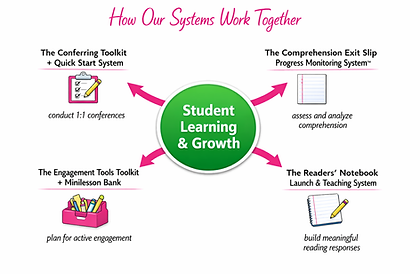
If you’re looking for low‑prep, high‑impact ways to help students stay focused, think deeply, and stay actively engaged during reading, you’ll love The Engagement Tools Toolkit™ + Minilesson Bank
It gives you:
✨ 15+ student‑friendly engagement tools (including a set of Think Sheets)
✨ 15+minilessons to use with each tool
✨ teacher guides to support modeling
✨ printable pages students can use right away
✨ a complete system that builds independence and thinking
Until next time...


Comments