
Why Authentic Active Engagement Should Be Part of EVERY Reading Lesson
Updated: Apr 29

Authentic active engagement is NOT shading in circles on a worksheet. OR, completing assigned lessons on a website that advertises a guarantee to raise test scores.
Active engagement is motivating students to engage in their reading work for authentic purposes that will help them grow as a reader and a learner.
Authentic active engagement means that we must nudge our readers to have a go at trying out the new skill or strategy within their own reading.
**Clicking A B C or D on a webpage ain’t gonna do it!
**Circling the right letter on a multiple-choice question ain’t gonna do it!
**Regurgitating literal details from a text ain’t gonna do it!
Authentic active engagement means giving young readers a chance to "try it out" with your encouragement and guidance when they are learning about using a new strategy or skill within their reading.

Active engagement means giving readers time to make mistakes.
Active engagement means giving your readers something they can work with--breaking reading strategies and skills into smaller manageable chunks so readers can see how it all fits together and connects with prior learning.
But how? The reading process is SO complex!
Readers must be actively engaged in the reading process to see how all the pieces connect and work together.
Readers need to know HOW to interact with a text. They need to see how proficient readers navigate the reading process to make meaning and build comprehension of a text they are reading.
Readers need opportunities to practice with the teacher, with partners and by themselves.
Readers need comprehension strategies broken down into more manageable pieces that they can connect together to help develop their understanding of how the reading process works.
Questions to Consider for Planning Active Engagement
❓What is authentic active engagement?
Authentic active engagement is about creating multiple opportunities for readers to interact with a text with the teacher, with partners and by themselves.
Authentic active engagement is about finding a variety of opportunities for readers to engage in conversations and discussions about a text.
Authentic active engagement is about finding opportunities for readers to engage in reflective thinking about a text.
Authentic active engagement is about finding opportunities for readers to try out a reading strategy or skill with guidance.
Authentic active engagement has its place within the reading minilesson as well as during independent reading.
❓What does authentic active engagement look like in a lesson?
Readers could be expected to actively engage by trying out the minilesson strategy or skill in their self-selected reading.

Readers who are stopping, noticing their inner conversation and reacting to the text are actively engaged in the reading process.
Readers could be expected to stop and jot using the new strategy or skill on a post-it note or index card.
Readers could be expected to try the strategy out while using the ultimate literacy tool--the Readers' Notebook.

This notebook should contain all the tips, tricks, minilessons, tools and the readers' own strategy and skill work.
Readers could be expected to turn and talk with a partner to make a plan about how they will use the new strategy or skill within their own independent reading.
Readers could be expected to try out a new literacy tool designed to support the strategy or skill they are learning.

During the minilesson, this tool could be used together as a group or with a reading partner before being expected to use it during independent reading.
More questions to consider about student engagement...
❓How will the level of engagement build over the school year?
In those first few weeks, literacy engagement is all about falling in love with stories and getting comfy in our "reading home."
Readers start by building reading stamina—moving from five minutes of focused "book look" time to sustained, independent reading. Early tasks are high-support, like choral reading or echo reading, which let everyone participate without fear.
As the year unfolds and your readers feel more confident, you’ll see that quiet interest turn into a vibrant energy.
By the second semester, those same students will be leading their own "Book Talks" and buzzing to share their newest finds with the whole class!
❓How should engagement increase in complexity over time?
Early on, we celebrate "quick wins"—spotting sight words or identifying the main character in a read-aloud. But as the grading periods pass, literacy tasks "level up" from simple participation to deep investment.
You’ll see students move from basic recall questions to using graphic organizers for character analysis or participating in Reader’s Theater to act out complex plots.
Engagement shifts from "What happened?" to "Why did it happen?", as students begin to make big-picture connections across different texts and use their "reading muscles" to tackle complex ideas they wouldn't have dreamed of back in August.
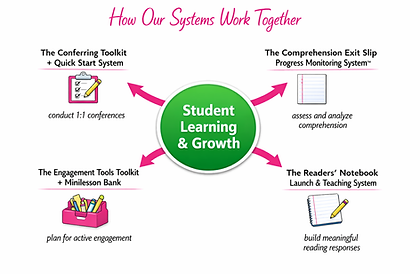
The Active Engagement Quick Start Toolkit gives you the essential tools and structures to help you get there.
Inside the toolkit, you’ll find:
a clear definition of authentic engagement
a predictable minilesson structure that supports thinking
a menu of engagement moves you can use right away
a ready‑to‑use minilesson
a teacher reflection page to help you notice what your readers and writers need most
Everything is simple, practical, and designed to support you — not overwhelm you.
Grab it right here ⬇️⬇️⬇️⬇️


Comments